Ray Dalio

Founder of Bridgewater Associates. On debt cycles, the changing world order, and principles for life and work.

6 topics · 84 distinct points

Debt cycles

2013–2026 · changed view

“But because we borrow, we have cycles. This isn't due to any laws or regulation, it's due to human nature and the way that credit works. Think of borrowing as simply a way of pulling spending forward. In order to buy something you can't afford, you need to spend more than you make. To do this, you essentially need to borrow from your future self. In doing so you create a time in the future that you need to spend less than you make in order to pay it back. It very quickly resembles a cycle. Basically, anytime you borrow you create a cycle. This is as true for an individual as it is for the economy. This is why understanding credit is so important because it sets into motion a mechanical, predictable series of events that will happen in the future.”

Principles for life & work

2018–2026

“Almost the only way that you understand what truth is, is through experimentation, and so when you go out and experiment you're going to learn a lot more about what truth is. But the essence of what I'm saying is that when you take a look at that, use truth, that find out what the realities are as a foundation, do the independent thinking, do the experimentation to find out what's true, and change and keep going after that.”

Investing & diversification

2018–2026

“Investing is an exchange of a lump sum payment for a future cash flow, right? So it's maybe the cash you have or even the cash you can borrow, but you can take a certain amount of cash and you buy something and what you're getting is a cash flow.”

The changing world order

2021–2026 · changed view

“The times ahead will be radically different from those that we've experienced in our lifetimes, though similar to many times before. How do I know that? Because they always have been. Over my roughly 50 years of global macroeconomic investing, I've learned the hard way that the most important events that surprised me, did so because they never happened in my lifetime. These painful surprises led me to study the last 500 years of history for similar situations where I saw that they had indeed happened many times before with the ups and the downs of the Dutch, British, and US empires. And every time they did, it was a sign of the changing world order.”

Radical transparency & decision-making

2018–2019

“What do I mean by an idea meritocracy? I want to be very tangible for you. In order to have an idea meritocracy, in other words, the best ideas winning out, wherever those ideas come from, you have to do three things. The first is that you have to put your honest thoughts on the table, honest thoughts on the table, for everybody to see and then look at. One of the problems of most groups of people, most organizations, most individuals, is that they don't want to be honest, and they don't like disagreement. You can go out to a restaurant and somebody says, "I like the food," somebody is going to be reluctant to say, "I don't like the food." Thoughtful disagreement is the second thing. You have to understand the art of disagreement, because if there's disagreement, that means somebody is going to be wrong, and how do you know the wrong person isn't you? You have to understand the art of thoughtful disagreement. Then once you have that disagreement to raise your probabilities of making better decisions, and that certainly happens if you do it well, then you have to have ways that are going to, idea meritocratic ways, of getting past your disagreement. In other words, you have to have protocols, and we do something which we call believability weighting decision-making based on different people's credibilities. That's what I mean by an idea meritocracy.”

The economic machine

2013–2025

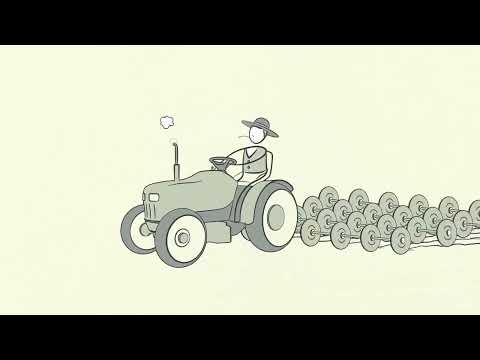
“Though the economy might seem complex, it works in a simple, mechanical way. It's made up of a few simple parts and a lot of simple transactions that are repeated over and over again a zillion times. These transactions are above all else driven by human nature, and they create 3 main forces that drive the economy. Number 1: Productivity growth. Number 2: The Short term debt cycle. And Number 3: The Long term debt cycle.”